
ELTA news
LRT addresses law enforcement over Nemunas Dawn leader
Vilnius, December 12 (ELTA) – The Lithuanian National Radio and Television (LRT) and its Director General Monika Garbačiauskaitė-Budrienė have addressed a court and prosecutors over falsehoods spread by leader of the Nemunas Dawn party, MP Remigijus Žemaitaitis, which undermine the public broadcaster’s reputation and the director general’s dignity and honour.
In the letters, LRT stressed that Žemaitaitis’ statements spread misinformation about LRT staff, damaging the public broadcaster’s professional reputation and posing a threat for public trust in the media and public bodies. LRT argues that the MP has been fuelling hatred to pit Lithuanian residents against the public broadcaster and, possibly, to inspire physical attacks against LRT staff.
According to the director general, LRT TV cameramen are now being harassed, things are being thrown at them, and their work is being obstructed, whereas journalists have noticed that interviewees are becoming hostile.
In mid-November, ethics watchdogs in Parliament opened a probe over the Nemunas Dawn leader’s statements about LRT on social platform Facebook.
In them, Žemaitaitis called the public broadcaster “communist”, “Soviet” and “dirty media”. He also called media outlets “propaganda”, spread false information about LRT funding and its director general.
Other airlines do not plan moving flights from Vilnius, says Lithuanian Airports CEO
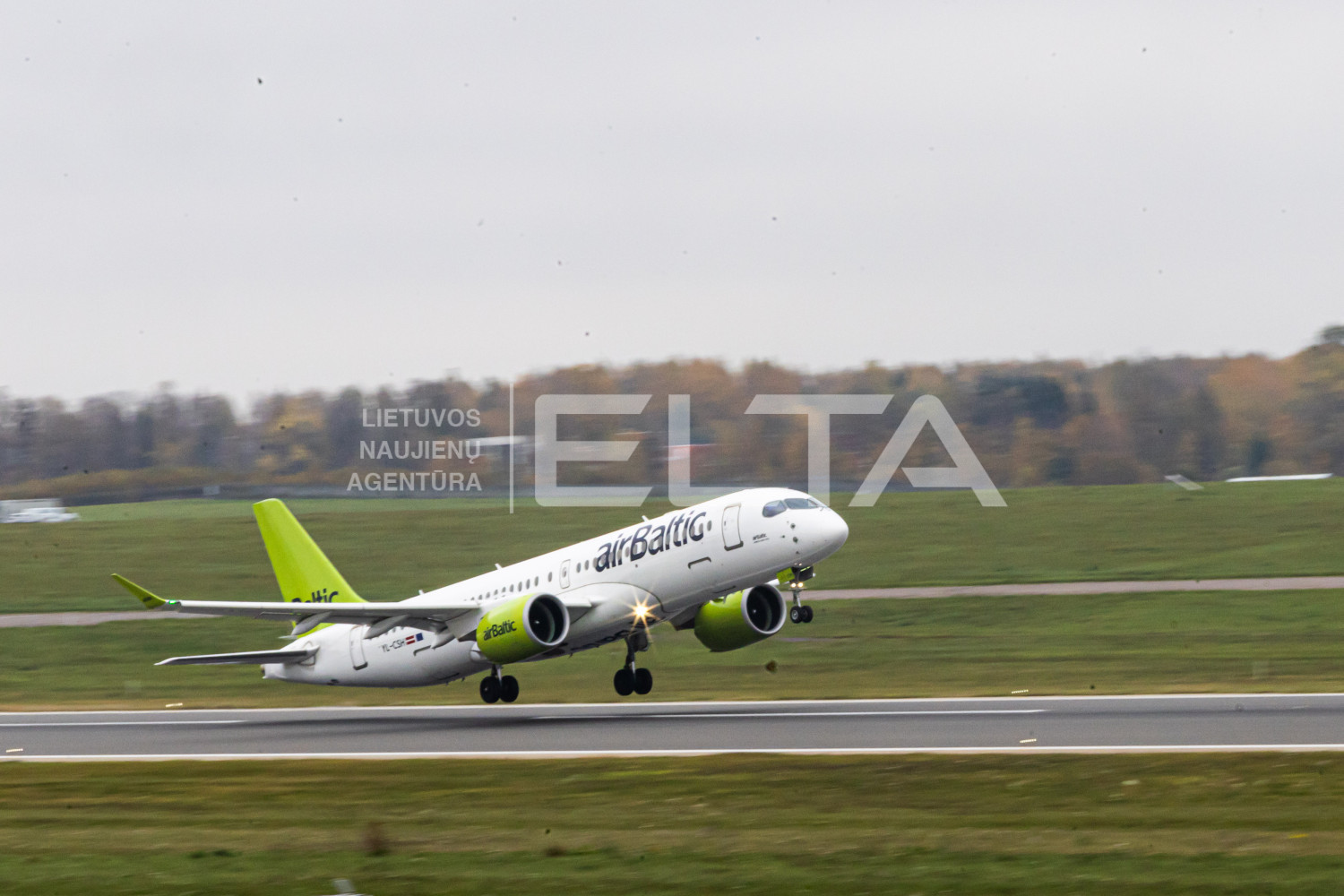
Vilnius, December 12 (ELTA) – Tour organiser Join UP! Baltic has announced that two charter flights to Egypt would depart from Kaunas Airport instead of from Vilnius. CEO of Lithuanian Airports (LTOU) Simonas Bartkus says other airlines do not plan following suit. The move comes amid cigarette smuggling balloons from Belarus that disrupt operations of Vilnius Airport, which is treated as a Belarusian hybrid attack against Lithuania.
“Other airlines as of today do not plan moving flights or somehow altering schedules. We keep in contact with all companies and all of them indicate that they want to continue flights to Vilnius Airport (VNO) that have been planned,” Bartkus told reporters at the Office of the Government on Friday.
It was announced earlier the same day that flights to the Egyptian resorts of Sharm el-Sheikh and Hurghada, operated by Join UP! Baltic, will depart from Kaunas Airport from 17 December. The services from Lithuania’s second-largest city are expected to continue until the end of March 2026.
Bartkus remarked on a positive note that now Lithuanians can travel to Egypt from all three airports – Vilnius, Kaunas and Palanga.
As reported previously, Finnair had announced that it was terminating an evening flight from Helsinki to Vilnius, which is one of four daily flights between the two cities. This will cost Vilnius Airport EUR 70,000–80,000 in lost revenue, but the amount is minor overall and will be offset by emergence of new flights and growing number of passengers, says Bartkus.
According to the CEO of Lithuanian Airports, passenger flows in the first 11 days of December 2025 have increased this year in Vilnius Airport compared with the identical period last year.
The increase was recorded even though the airport had to be closed a number of times since October due to contraband balloons flying from Belarus and disrupting air traffic.
Young people stage pro-democracy rally near Seimas
Vilnius, December 12 (ELTA) – A group of students and representatives of youth organisations on Friday held a pro-democracy rally near the Lithuanian Parliament building in Vilnius.
The demonstration organised by the Lithuanian Youth Council (LiJOT), Vilnius University Students’ Representation and the Lithuanian National Union of Students (LSS) was attended by around 20 people, but more were expected to turn up as the rally would continue until the evening.
Umberto Masi, president of the LiJOT, said that Lithuania is now on the path that undermines people’s trust in the country, whereas democracy cannot function without the participation of people and without trust in state institutions.
He says the rally expresses concern not about isolated decisions of the current government, but rather about the government’s overall view towards politics and examples set by decision-makers.
Organisers of the event brought a coffin to Independence Square near the Seimas, placed wreaths and candles around it, as well as a banner reading “A Country That Works”, which was the Social Democratic Party’s parliamentary election slogan.
Mr Masi says the rally was organised due to the ruling coalition’s decisions in the areas of culture and education, rhetoric of some lawmakers about young people, and Thursday’s vote to amend the Law on the Lithuanian National Radion and Television (LRT), aimed at facilitating the dismissal of its director general.
Several attendees of the demonstration noted that the ruling coalition consisting of the Social Democratic Party (LSDP), the Nemunas Dawn and the Farmers and Greens Union (LVŽS) disregarded the opinion of the majority of the population and submitted amendments to the law on LRT disregarding the protest “Hands Off Free Speech”.
Defmin rejects doubts over firms in Rūdninkai campus tender
Vilnius, December 12 (ELTA) – Minister of National Defence Robertas Kaunas has dismissed concerns over firms shortlisted to build the Rūdninkai military campus in its second phase development, after media reported that Rudina, a subsidiary of Fegda, which previously built a defective road to the training area, was among the winners.
Rudina is owned by Conres LT and Fegda, the latter often linked to Social Democratic Party leader Mindaugas Sinkevičius, Delfi said.
The firm topped the final list for Part A of the procurement with a EUR 348.35 million offer, which was recognised as the winning bid. For Part B, UAB Merko statyba ranked first with a bid of EUR 280.43 million, according to Delfi.
Kaunas said oversight bodies had not doubts about any of the bidders to develop the Rūdninkai military campus set to host the German Brigade by the end of 2027.
“None of the companies or their partners triggered concerns at the Special Investigation Service (STT), the Second Investigation Department (AOTD), the Prosecutor General’s Office or the Public Procurement Service,” he told reporters at the ministry on Friday.
“All six bidding groups were evaluated, and there was no legal basis to exclude any of them,” the minister added.
Kaunas also noted that confidentiality rules prevented him from commenting on specific companies.
“I have no right to name any firms (…). I have seen companies mentioned in the media,” he said.
Following the reports, President Gitanas Nausėda will meet Kaunas on Friday to discuss “public procurement in the field of defence,” presidential adviser Ridas Jasiulionis told ELTA.
Electricity price in Lithuania up by 6% in November
Vilnius, December 12 (ELTA) – In November 2025, compared with October 2025, the average wholesale price of electricity in Lithuania and Latvia increased by 6% to EUR 110.91 per megawatt hour (MWh), while in Estonia it rose by 7% to EUR 95.90/MWh.
According to independent electricity supplier Elektrum, electricity prices in the Baltic States increased due to lower demand, maintenance of thermal power plants in Latvia and Lithuania, lower electricity generation by solar and wind power plants, and greater electricity consumption due to colder weather.
In November 2025, compared with October 2025, electricity consumption in the Baltic countries increased by 8% and totalled 2,447 gigawatt hours (GWh).
Electricity consumption in Lithuania increased by 10% to 1,106 GWh, in Latvia by 6% to 627 GWh and in Estonia by 6% to 713 GWh.
Electricity generation in the Baltic countries decreased by 2% to 1,392 GWh last month.
Electricity generation in Lithuania dropped by 25% to 575 GWh, in Estonia it decreased by 1% to 346 GWh, while in Latvia it soared by 57% to 471 GWh.
In November 2025, the Baltic countries on aggregate generated 57% of electricity required for consumption. Electricity generation in Lithuania satisfied 52% of the local electricity consumption demand, compared with 75% in Latvia and 49% in Estonia.
CAESAR Mk II wheeled howitzer acquisition contract signed
Vilnius, December 12 (ELTA) – The Ministry of National Defence continues adding capability to the Lithuanian defence with the latest signature of a contract on acquisition of CAESAR Mk II self-propelled howitzers from France’s leader of defence industry KNDS France. This is Lithuania’s second acquisition of the mentioned system and the largest purchase from France ever made. The contract stands at approx. EUR 252 million, reports the Ministry of National Defence.
Next generation CAESAR Mk II 155 mm 6×6 wheeled howitzers are seen as one of the moist advanced artillery platforms in the world, and tested on a real battlefield in Ukraine. The system will enhance Lithuania’s combat power and battlefield mobility. The platform upgraded with Lithuania’s contribution has an enforced armoured cabin, more efficient engine, advanced control system and better resilience in complex tactical situations.
“Selection of CAESAR Mk II is an important step in strengthening Lithuania’s defence and a clear signal of a developing cooperation with France. This advanced system will add mobility and fire power to the Lithuanian Armed Forces, while closer partnership with the French defence sector will strengthen our ties with an Ally,” says Minister of National Defence Robertas Kaunas.
According to the contract, Lithuania shall receive not just the system itself but also a full package of logistical and integration solutions: training courses, simulation systems, spares. An industrial cooperation contract has been signed in parallel to the purchase: KNDS France will invest EUR 12 million in a maintenance and repair facility constructions and preparation for work in Lithuania. The second purchase of CAESAR Mk II makes Lithuania the second largest user of the system after France.
The projects comes under the umbrella of SAFE investment plan. The 155 mm ammunition to be produced in Lithuania as of 2027 will be fully compatible with the purchased equipment.
CAESAR is one of the few wheeled 155 mm self-propelled artillery systems manufactured in NATO and the EU that has been battle-tested. Other Allies that plan to buy it are Belgium, the Czech Republic, France, Estonia, Slovenia, Croatia and Portugal.
Aneli Capital launches EUR 35mn fund for Baltic and CEE startups
Vilnius, December 12 (ELTA) – A team of experts with over 15 years of experience in funding businesses has launched Aneli Capital, a fund to support early-stage startups in the Baltics, Poland, and other Central and Eastern European (CEE) countries. The EUR 35 million fund will primarily focus on Information and Communication Technology (ICT) as well as robotics, space, photonics, and energy startups, with the goal of helping them grow and become ready for follow-on investors, Lithuania’s national development bank ILTE said in a press release.
While CEE startups are gradually becoming more visible in the international startup scene, they still face issues such as a lack of funding and difficulties in scaling compared to their Western counterparts.
Aneli Capital plans to help solve these challenges by offering efficient, quick decision-making and founder-friendly terms in addition to capital.
“Many investors lean in when a sector becomes fashionable and step back once the hype fades. We don’t work that way. We are going to look beyond hype cycles and focus on companies that build real products, attract paying customers early, and prove their economics,” says Daiva Rakauskaitė, CFA, partner and fund manager. “Our goal is to be the partner that stays for the full journey, not just the exciting part at the beginning.”
Other Fund Partners include Nerijus Baliūnas, who leads business development and strategy; Jacek Blonski, who leads deep tech, networking, and negotiations; and Sabina Sinicienė, Fund’s Investment Director.
Aneli Capital members have long been active in the investment space. They manage Business Angel Fund II and co-founded Lithuanian Venture Capital Association as well as the Lithuanian Business Angel Network (LitBAN).
According to Rakauskaitė, who has been active in the investing field for over 30 years and holds a Chartered Financial Analyst designation, previous experience gives the team an upper hand in fields like regulatory technology, energy management, photonics, biotechnology, smart manufacturing, data analytics, and financial forecasting, as well as strong networking capabilities compared to some of its competitors.
Next year, Aneli Capital is planning to fund eight startups and exit several companies from previous funds.
In total, during the first five years, the fund is planning to make around 20 investments. The average investment will be roughly €1.5 million, typically distributed across several tranches.
According to Rakauskaitė, more than half of the €35 million will be invested in Lithuania, Aneli Capital’s home market, while the rest will support startups in Latvia, Estonia, Poland, and other CEE countries.
“No matter the country, we are looking for truly promising founders whose startups are already delivering measurable growth and results. Startups seeking funding often ask for capital before demonstrating real growth, but it should be the other way around: first showing traction, then attracting investment,” Rakauskaitė says.
Besides ICT, robotics, and energy, the fund sees the most untapped opportunities in photonics and smart manufacturing, and plans to focus on these segments.
This year, the main focus for venture capitalists is on AI companies. During the first half of 2025, investments in AI startups accounted for 34.5% of all deals in Europe, while in the US this figure was around 60%, PitchBook’s report shows.
A part of Aneli Capital’s fund will also be allocated to AI startups. However, Rakauskaitė says that the priority will be AI solutions that already work or are in testing mode and can show reliable results in practice.
Aneli Capital will manage the capital provided by the National Lithuanian Development Bank ILTE and a fund of a Warsaw-listed Polish company, Magna Polonia. The company’s fund is currently looking for new investors.
“We are excited to invest in Aneli Capital, as the fund has extensive experience in managing startups, and will soon be strengthened by highly qualified advisors. With this investment, we are aiming for two goals: to earn a solid return for our investors by investing in companies operating in progressive sectors, while at the same time supporting young tech companies from the CEE region,” says Miroslaw Janisiewicz, the chairman of the management board.
Meanwhile, Inga Beiliūnienė, Head of the International Relations and Partnerships Department at ILTE, stresses that capital to develop new technologies is especially important for small countries like Lithuania.
“ILTE has consistently supported innovation development and experimental activities in companies and teams, because this is exactly how solutions driving long-term economic progress are created. By investing in startups, we help develop new technologies while also strengthening the country’s competitiveness and resilience to future challenges,” Beiliūnienė says.
Municipalities are closest to providing real help to people – auditor general
Vilnius, December 12 (ELTA) – Auditor General Irena Segalovičienė and Head of Financial Audit Department 1 Danguolė Krištopavičienė participated in the annual conference of the Association of Controllers for Local Authorities. The conference covered a wide range of topics, from the soundness of municipal financial decisions to preparedness for addressing issues of countrywide importance in education and civil protection, reports the National Audit Office.
In welcoming the conference participants, Auditor General Irena Segalovičienė emphasized the role of municipalities and municipal control and audit services (SKAT) in ensuring public safety, non-formal education for children, and the obligation of municipalities to comply with fiscal rules.
"The insights of our fiscal institution clearly show the growing importance of SKATs. Municipalities face greater risks in terms of the accuracy of revenue forecasts and the selection of investment projects. It is therefore particularly important to assess the relevance of projects, analyze education costs, and ensure data quality. The work of SKATs – independently assessing risks and helping municipalities make sustainable, data-driven decisions in a timely manner – is more important today than ever before," Irena Segalovičienė stressed in her speech.
The auditor general noted that the safety of residents directly depends on the preparedness of municipalities, which are closest to providing real assistance to people. Therefore, according to the auditor general, the role of SKATs is irreplaceable in objectively assessing the accuracy of data so that the condition of shelters is accurately inventoried, warning systems function reliably, and municipalities have plans for the protection of residents.
At the event, Danguolė Krištopavičienė, head of the Financial Audit Department 1 at the National Audit Office, gave a presentation on the cooperation between the National Audit Office and SKATs. The presentation highlighted the risks and likelihood of errors in financial audits and the importance of audit coordination, as the audit of the 2025 national set of annual accounts will be presented together with the most important state reports as early as spring 2026.
It is important to note that the National Audit Office conducts an external review of SKATs audits every year to assess whether the selected financial and performance audits have been carried out in accordance with the applicable audit standards and the audit methodologies approved by the National Audit Office. The results of external reviews are published on the National Audit Office website.
In May this year, the National Audit Office launched a digital audit methodology platform to help SKATs strengthen public sector auditing. The website brings together the latest international practices, methodologies, guidelines, and examples to help everyone work more consistently and adhere to uniform quality standards.
Chief of Defence Staff took part in SACT Alliance Warfare Development Conference
Vilnius, December 12 (ELTA) – On 8 through 12 December, Chief of the Defence Staff of the Lithuanian Armed Forces Rear Admiral Giedrius Premeneckas attended the Alliance Warfare Development Conference organised by the Supreme Allied Commander Transformation (SACT), reports the Armed Forces.
The seventh iteration of the Conference elaborated on Winning the Race of Adaptation. According to chief of the defence staff RADM Giedrius Premeneckas, the theme was reflective of the current security situation featuring particularly quick geopolitical and technological shifts. NATO needed to adapt quicker than ever if it wanted to maintained the advantage over potential aggressors.
At the Conference, representatives of NATO Allies and partners looked into application of lessons learned from ongoing operations and exercises in long-term activity plans. Participants also focused on innovations and their practical application at military level. They discussed the possibility of quick transfer of new technology and solutions from conceptual to effective application level in the current threat context.
“The modern conflicts and threats give no space for long deliberation – the Allies need to be able to assess, test and integrate new capabilities in collective defence structures quickly,” said Chief of the Defence Staff RADM Giedrius Premeneckas.
Another topic highlighted at the Conference was a quicker application of innovative solutions as one of the key factors of advantage in a dynamic security environment.
Participants of the Conference agreed that innovation had to be applied as a matter of constant and targeted process rather than sporadically because that was the only way for NATO to stay a step ahead, respond to emerging threats and ensure strong collective defence.
The Conference also serves as a run-up to the upcoming Military Committee Conference and NATO CHODs discussions in early 2026. Solutions proposed and insights offered at the Conference will shape the collective Alliance priorities.
Seimas approves State budget for 2026-2028
Vilnius, December 12 (ELTA) – On Thursday, the Seimas approved the State budget for 2026-2028 prepared by the Ministry of Finance, which focuses on three priorities: personal income and social security, defence and infrastructure. 80 members of the Seimas voted in favour of the budget for 2026-2028, 39 against and 7 abstained, reports the Ministry of Finance.
“This budget is balanced to meet top priorities of the population – we raise salaries for pedagogical staff, academia and statutory officials, and invest in social security, infrastructure and culture. At the same time, we are not only providing unprecedented funding for defence but also committing to maintaining it in the long term. The budget reflects the will of the governing coalition – security and deterrence must be financed without compromise, and national defence remains our top priority, as today’s geopolitical reality requires decisions with real power rather than symbolic ones,” Minister of Finance Kristupas Vaitiekūnas notes.
According to the minister, “Our goal is for the 2026 budget to be sustainable, responsible and focused on real improvements in quality of life of the population. While fiscal space is limited, we make decisions that bring the greatest returns to society today and in the future, and every additional euro goes where it creates the most value.”
Personal income and social security
The 2026 budget provides an additional EUR 1.06 billion for personal income and social security. Of this amount, EUR 554.2 million will be allocated to increasing the income of the employed.
EUR 250.1 million will be allocated to raise the salaries of pedagogical staff, academic and non-academic staff of research and higher education institutions, sports coaches, EUR 148 million to medical staff, EUR 39.2 million to statutory officials (Fire and Rescue Department, Police Department, State Border Guard Service, Prison Service, Probation Service, Customs Department), EUR 15 million to cultural institutions and arts workers, EUR 10.6 million to medical residents, EUR 4 million to staff of the Office of the Seimas and EUR 1 million to staff of the National Audit Office.
It is estimated that, compared to 2025, teachers’ net salaries will grow on average by EUR 157 next year, those of academic staff of higher education institutions by EUR 177, and coaches by EUR 128. This means that the salaries of all these employees will increase by an average of +8.41%. The total payroll of the statutory services will increase by +7%.
Compared to 2025, doctors’ net salaries will increase on average by EUR 103 (3%), nurses – by EUR 127 (8%), medical residents by EUR 313 (12.6%) and cultural and arts workers by EUR 62 (5%).
The minimum monthly wages (MMW) will rise by 11.1% next year – from EUR 1038 to EUR 1153. This change will result in an additional increase of EUR 69.58 in net income of the individuals earning MMW.
At the same time, the baseline is being increased next year to ensure public sector wage growth and to offset the impact of inflation. For this purpose, the State budget provides for almost EUR 29.1 million each year.
With effect from 1 January 2026, the procedure for indexation of the basic amounts of social benefits will be modified to ensure that they reflect changes in prices and average wages, leading to a faster indexation of benefits linked to the basic amounts. Due to the indexation of the basic amounts of social benefits, additional funding of EUR 121.8 million is allocated in the State budget for increased scholarships, child benefits, benefits, compensation for the costs of providing individual aid to persons with disabilities and other benefits.
This means that from 1 June 2026, the one-off child allowance will increase by EUR 266 (35%) and the child support allowance by EUR 59 (47%). The range of beneficiaries of the childcare allowance is also broadened to cover all persons bringing up children (not only those in education or training) who are not entitled to the childcare allowance from Sodra.
The indexation of the basic social benefit will result in an increase of 5.7% in child benefit, scholarships, free lunch for pupils, of which child money will increase by EUR 7 (from EUR 122.5 to EUR 129.5).
Old-age pensions will be increased by 12% next year, with a budget of EUR 388.4 million. The average old-age pension will increase by EUR 80 next year (from EUR 670 to EUR 750) for those with a minimum period of service – by EUR 90 (from EUR 720 to EUR 810). The decision will affect 640,000 persons.
Defence
As part of the implementation of the Government Programme and the decision of the State Defence Council to allocate at least 5% of gross domestic product (GDP) to defence in 2026-2030, funding of the Ministry of National Defence together with the Defence Fund will amount to EUR 4.8 billion or 5.38% of gross domestic product (GDP) in 2026. Of this amount, EUR 700.3 million will be the funds of the State Defence Fund.
Defence funding will grow by almost EUR 1.6 billion next year, more than any other area. Defence spending will account for almost 14% of total budget expenditure in 2026 (excluding EU and Next Generation Lithuania loan funds), and defence funding will rank second in the overall spending structure after social security.
Increased funding is planned for strengthening national defence, modernization of the Lithuanian Armed Forces, acquisition of new and modern weapons, development of military infrastructure (construction of polygons, barracks). The biggest priorities in the near future are the establishment of the National Division and the deployment of the German Brigade in Lithuania by 2027.
Infrastructure
In 2026, EUR 815.5 million will be allocated to the national infrastructure. Of this amount, EUR 436.6 million is earmarked for the Road Maintenance and Development Programme (RMDP), EUR 178.8 million for the State Road Fund and EUR 200.1 million from EU financial assistance.
As the RMDP decreases, the additional EUR 48 million in next year’s budget has kept funding for municipal roads from the RMDP and will amount to EUR 206.4 million in 2026.
The amendment to the 2021-2027 Investment Programme, which is currently being prepared, provides for EUR 99.6 million of European Union (EU) funding for military mobility activities through reallocations within the programme and additional funding. Also, from 2027 onwards, revenue from the electronic road toll (E-tolling) is expected (EUR 200 million each in 2027 and 2028), which is EUR 126 million more than planned to be collected from the road user charge in 2026.
Other purposes
In accordance with the adopted amendment to the Law on Lithuanian National Radio and Television (LRT), the reduced appropriations of EUR 8.5 million to LRT will be allocated to the cultural sector: M. K. Čiurlionis's anniversary exhibition in Tokyo to cover transportation and insurance costs (EUR 235 000 in 2026), Lithuanian-German cultural exchange programme (EUR 200 000 in 2026), and other cultural purposes.
An additional EUR 1.2 million is allocated next year to the Chancellery of the Seimas to prepare for the Presidency of the Council of the EU and the TV programme “Seimas Live” (broadcasting via digital terrestrial network).
Revenue and expenditure are increasing
In 2026–2028, the State budget (including EU funds) provides revenue of EUR 21.1 billion. Compared to 2025, revenue is growing by 17.2% or EUR 3.1 billion. Expenditure in the State budget is estimated at EUR 27.5 billion (an increase of 19.1% compared to 2025, or more than EUR 4.4 billion).
The largest share of budget expenditure (excluding EU funds) is allocated to social security next year, with more than EUR 12.6 billion (an additional almost EUR 1.1 billion compared to 2025). Health will receive almost EUR 4.8 billion (additional EUR 414 million), education – EUR 4.8 billion (additional EUR 517 million), defence – EUR 4.9 billion (additional EUR 1.6 billion), public order and public protection – EUR 1 billion (additional EUR 23 million), recreation, culture and religion – EUR 947 million (additional EUR 43 million), housing and utility – EUR 741 million (additional EUR 63 million), environmental protection – EUR 515 million (additional EUR 76 million), general public services – EUR 3 billion (additional EUR 461 million), economy – EUR 2.1 billion (additional EUR 47 million).
Municipal revenue is also growing significantly, amounting to almost EUR 7.5 billion (EUR 807.5 million or 12.1% increase compared to 2025, of which autonomous municipal revenue alone will grow by EUR 480 million or 11.5%).
EU investment in Lithuania is accelerating, with record amounts of EU funds planned for 2026. Next year, EUR 1,247 million is planned to come from the 2021-2027 Investment Programme and EUR 1 643 million from the plan “Next Generation Lithuania”.
Dynamics of the balance
The State budget for 2026–2028 prepared by the Ministry of Finance projects a general government deficit of -2.8% of GDP in 2026, and without taking into account the statistical correction of the acquisition of military equipment, weapons and stockpiles -5% of GDP. General government debt will be 45.4% of GDP next year.
Nausėda congratulated President-elect of Switzerland Guy Parmelin
Vilnius, December 12 (ELTA) – President Gitanas Nausėda, on behalf of the people of Lithuania and on his own behalf, extended congratulations to President-elect of the Swiss Confederation Guy Parmelin, said the presidency.
The president emphasised that he values the long-standing and friendly bilateral relations between Lithuania and Switzerland. Next year will mark two significant anniversaries: the 105th anniversary of the establishment of diplomatic relations and the 35th anniversary of their reestablishment.
According to the president, Lithuania remains committed to further strengthening the ties between the two countries in the fields of economy, science, innovation, culture, and education, and to building an even closer and deeper bonds of friendship.
“I appreciate our countries’ strong commitment to supporting Ukraine in its fight for freedom, especially the humanitarian assistance your country provides. I am confident that our nations, united by respect for fundamental democratic values and their determination to uphold the rules-based international order, will continue to advance a comprehensive dialogue between Switzerland and the European Union and maintain effective cooperation in other multilateral formats,” the president wrote in his message of congratulations.
Gitanas Nausėda wished the new Swiss leader strength and success in carrying out these important responsibilities and in working for the benefit of Switzerland and its people.
Themes